How bankers structure a pitch book

A pitch book is one of the most standardized documents in finance. Whichever bank wrote it and whichever board is reading it, the book walks the same arc: a cover, an executive summary, the situation and the market, the valuation work, a process roadmap, and an appendix that outweighs everything before it. That is not a lack of imagination. The format survives because a director can absorb a hundred pages in an hour when every reader already knows where everything lives.
The slides below are native PowerPoint recreations of real, publicly published bank decks from our template library. They are worth studying section by section, because each section has one job.
The cover says almost nothing, on purpose
A codename, the audience, the date, the bank. Deals get codenames because covers get left on printers. The restraint is the point: the cover promises confidentiality and seriousness before a single number appears. Compare that with the title slides most software produces, which promise a webinar.
The executive summary is the whole book in four boxes
Senior readers may never get past page five, so page five carries the entire argument: what is happening in the market, what the company is worth, what the bank recommends. Everything after it is support. If you write one section well, write this one.
Valuation is the centerpiece
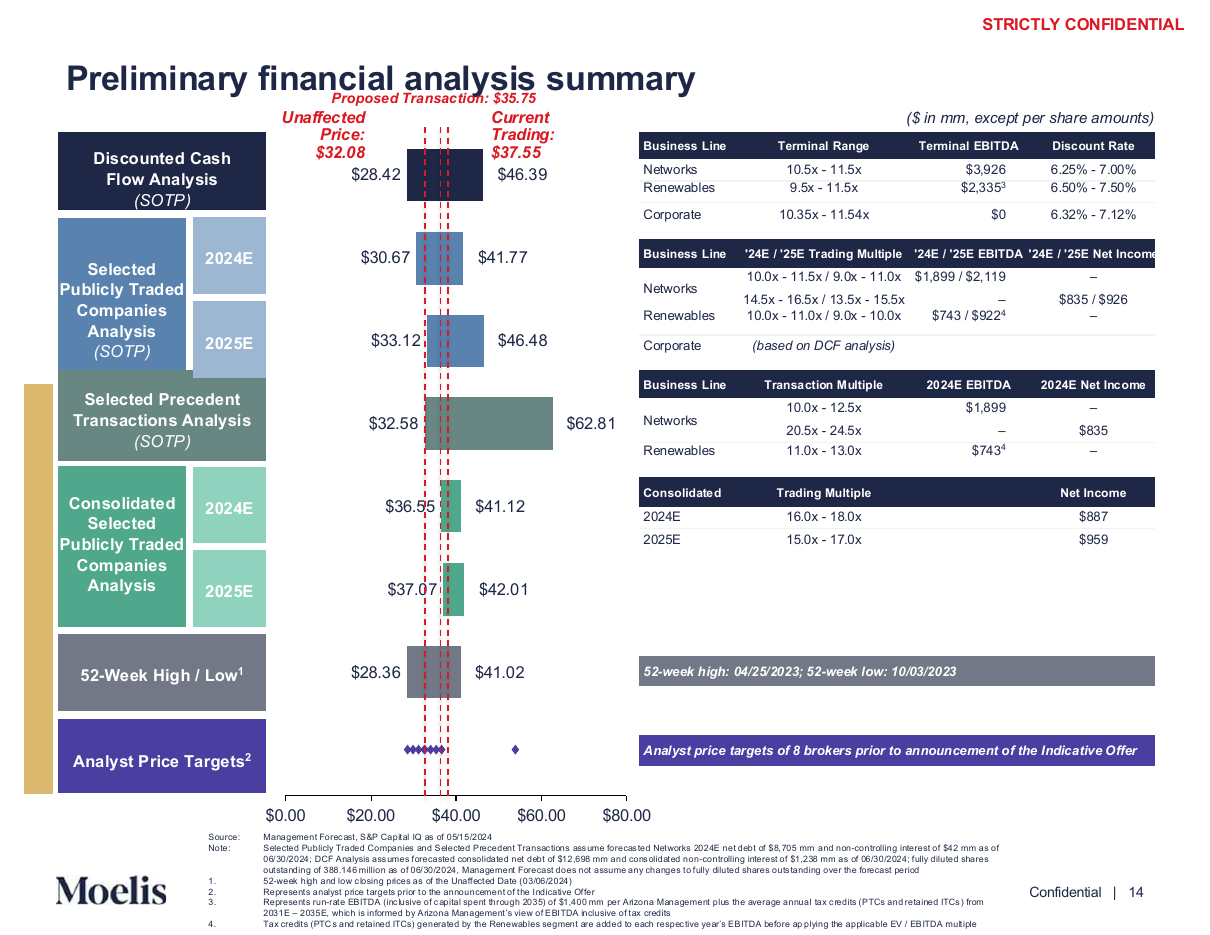
The football field earns its place as the most recognizable slide in banking because it answers the only question the room actually has, what is this worth, without pretending to more precision than the analysis supports. Each bar is a methodology. The DCF, the trading comparables, the precedent transactions, and the market's own verdicts, the 52-week range and analyst targets, all land on one axis. Where the bars overlap is where the conversation happens.
Process pages do the quiet work
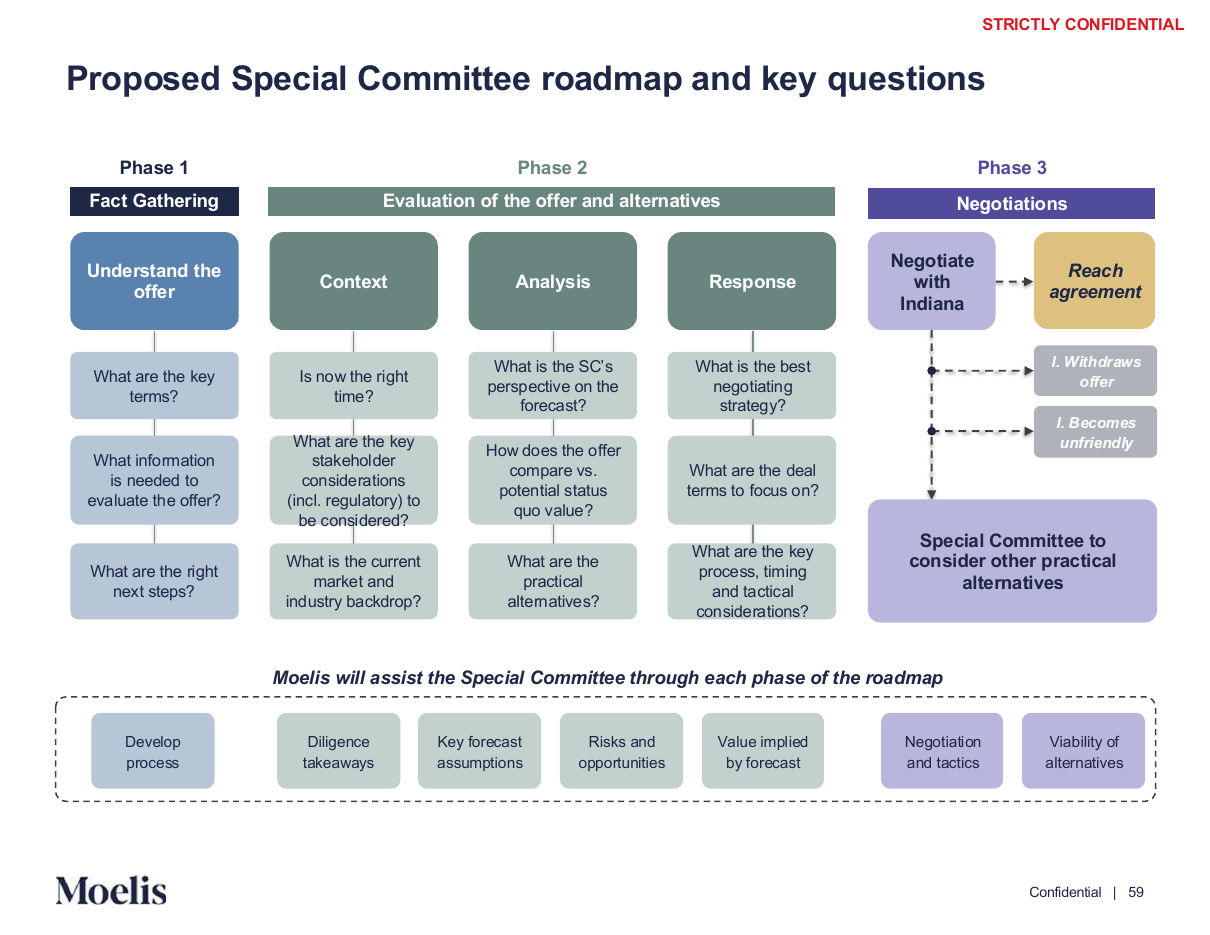
After the valuation, the book turns to what happens next: phases, workstreams, timing, and the questions the client should be asking at each stage. These slides rarely get admired and always get used. They are the pages a board returns to three weeks later.
The appendix takes the rest: backup analyses, sensitivity tables, detailed comps. A good book moves anything a reader might challenge into the appendix and keeps the front half clean.
If you are building one of these, start from real layouts rather than a blank master. The investment banking templates cover every section above, recreated as native, editable slides, and the UltraOffice for investment banking page shows how the workspace builds the rest of the book around them.