Anatomy of a consulting slide
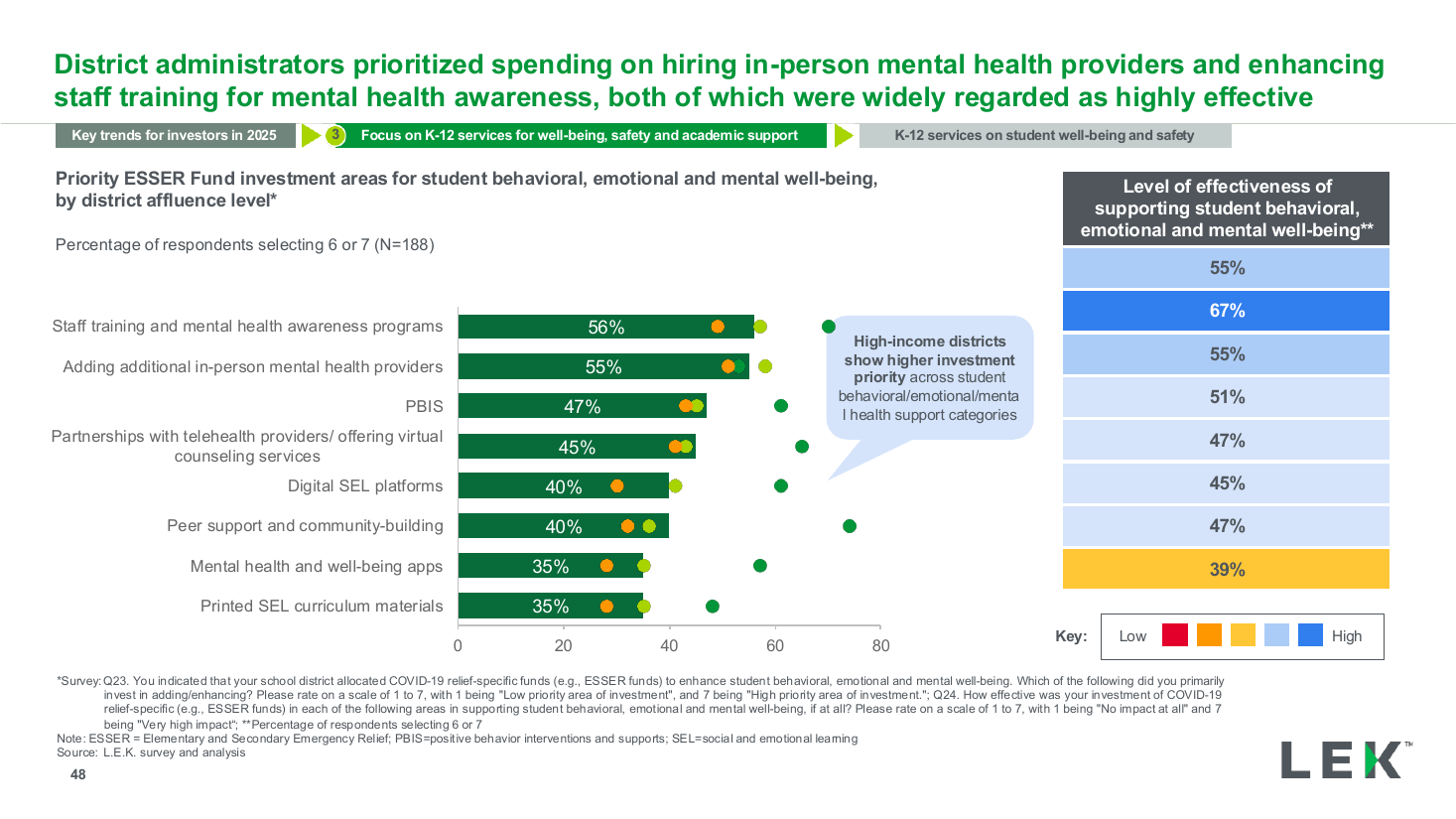
Put a slide from L.E.K., EY-Parthenon, or BCG next to an ordinary corporate slide and the difference is visible from across the room, before you can read a word. It is not the template. It is a set of working rules the top firms all converged on, because partners have been editing associates' pages for decades and the rules are what survived.
The title is a sentence with a verdict
The strongest habit is the action title. A consulting slide is never headed "Survey results" or "Market overview." The title states the finding in a full sentence, so a partner flipping through the deck reads only the titles and still gets the whole argument. Look at the slide above: the title tells you what district administrators prioritized and that it worked. The chart below it exists to prove that sentence, not to decorate it.
This is also the fastest edit you can make to your own deck today. Rewrite every label title as the finding it hides. If a slide has no finding to state, that is worth knowing too.
One message per slide
Each page carries one claim and the evidence for it. When an analysis produces two findings, it becomes two slides. The discipline feels wasteful to people raised on dense corporate decks, and it is why a consulting deck can be read at speaking pace in a boardroom without anyone squinting.
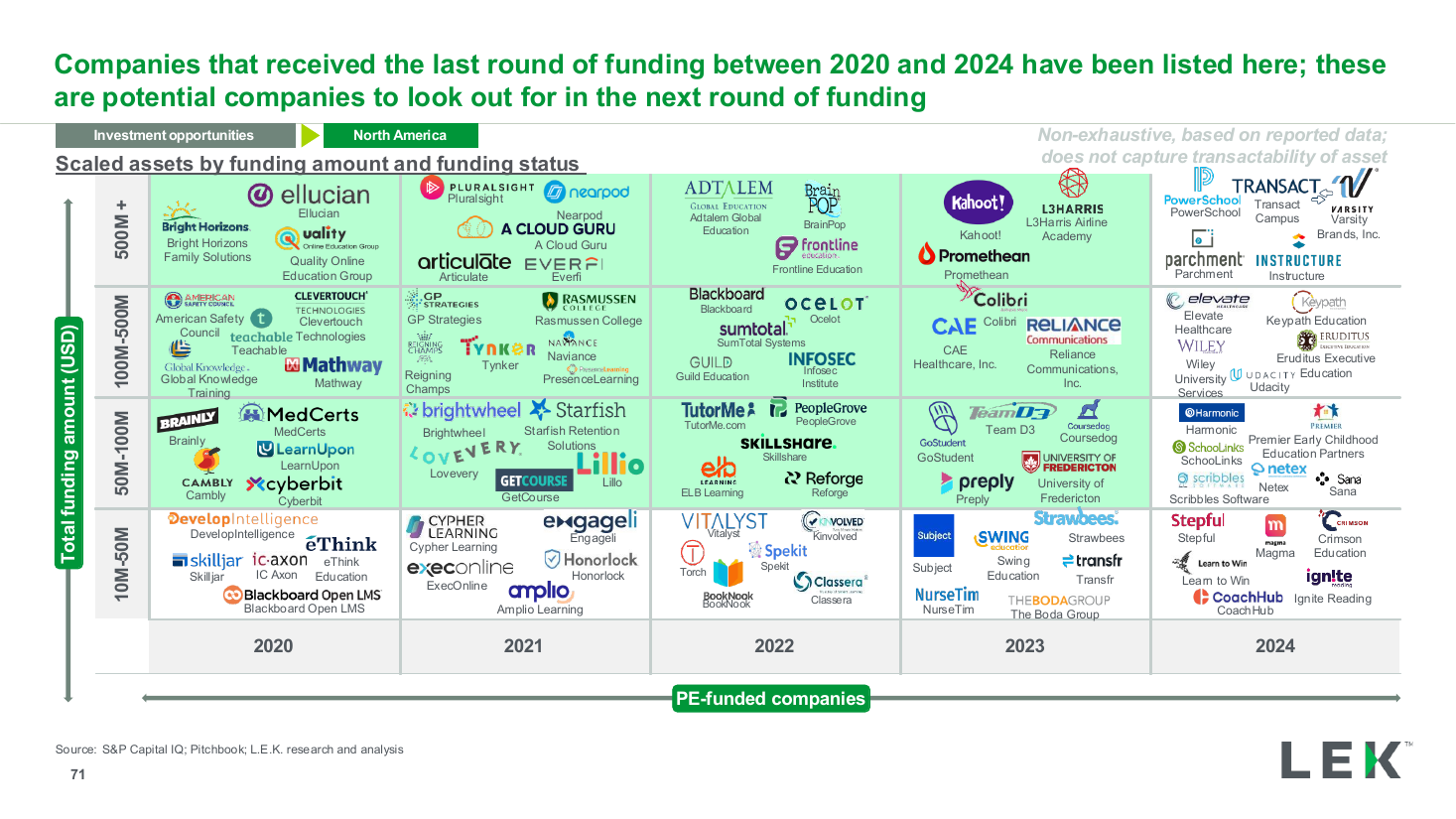
Even the busiest layouts obey it. The market map above holds dozens of company logos, and it still makes exactly one claim, stated in the title: these are the companies to watch for the next funding round. The two axes do the analytical work. Position is the argument.
The furniture is doing quiet work too
The rest of the anatomy is easy to miss. A kicker box calls out the so-what the reader might skip past. The source line and footnotes sit in the same place on every page, because a claim without a source does not survive a client's analyst reading the deck overnight. And the page tracker in the corner tells you where you are in the argument, which matters in a document built to be read in order.
All of the slides in this post are native PowerPoint recreations of real published consulting work, and the consulting templates section of the library has many more, including market maps and executive summaries. Start from one, keep the anatomy, and put your argument in.